Drastic cost reduction
Proprietary NGP chemistry leaves minimal wash water — you save on the chemicals going in and the hazardous-waste disposal going out.
SOLAS Reg. II-2/10.11 — in force since 1 January 2026
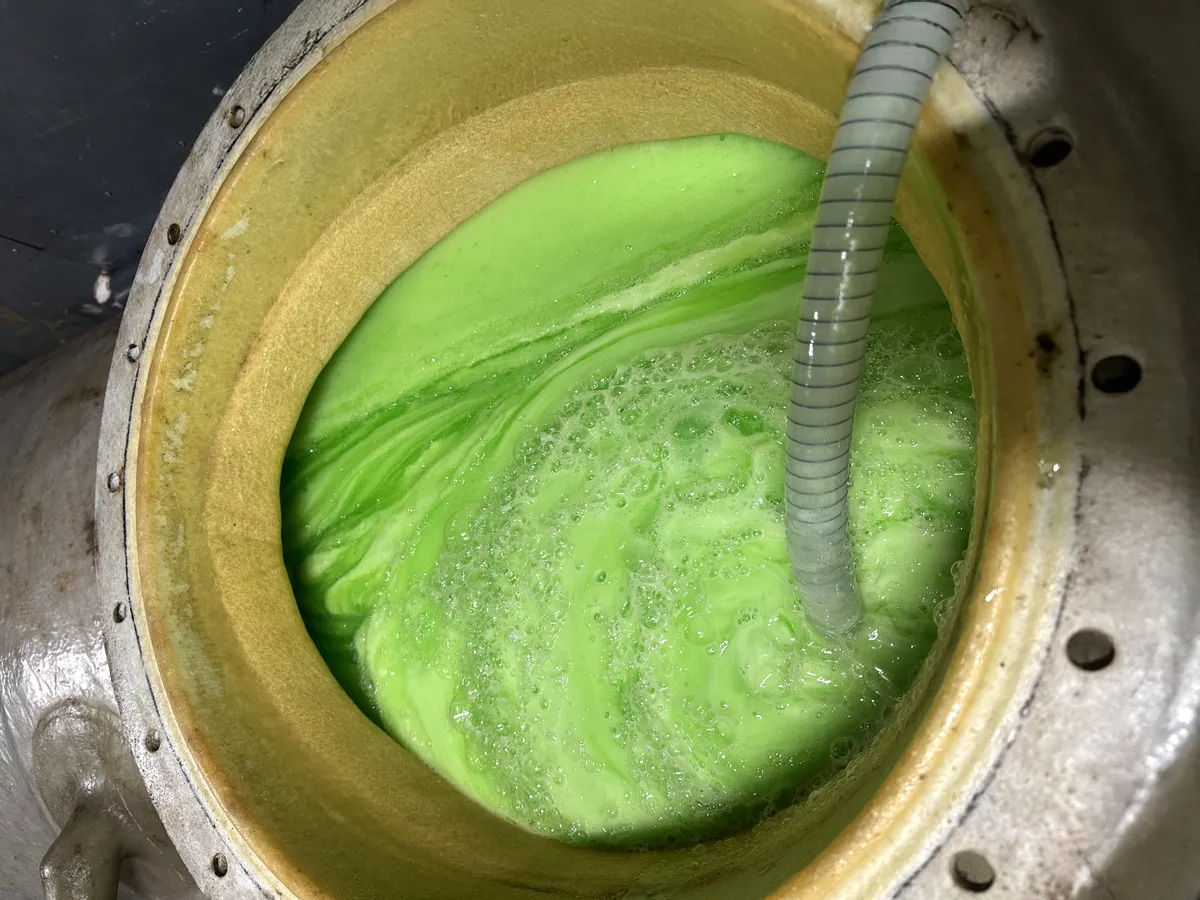
The same chemistry that made it the perfect firefighting agent makes it cling to tanks and pipework long after the foam is gone. Simply draining a tank is non-compliant — residual cross-contamination will fail laboratory analysis.
Book FoamSafe TransitionSelf-service check · two minutes
What foam is in your system right now?
Answer five questions about your foam system and get a preliminary compliance status for the vessel: which rules apply to it, what documentation a surveyor will ask for, and a one-page assessment you can forward to your technical manager.
New fluorine-free foam is a purchase order. A compliant system is engineering. PFAS from decades of legacy foam persists on internal surfaces and components — and it fails the laboratory analysis your class society will read. FoamSafe treats the transition as system preparation, not a consumables change: cleaned, verified, refilled and certified in one accountable scope.
Remove PFAS. Properly.
PFAS doesn’t float free, waiting to be rinsed away. It bonds to the system itself — adsorbed into metals, coatings and decades of foam residue. A water flush dilutes the concentration; the bonded layer stays. And at limits measured in parts per billion, what stays is enough to fail.
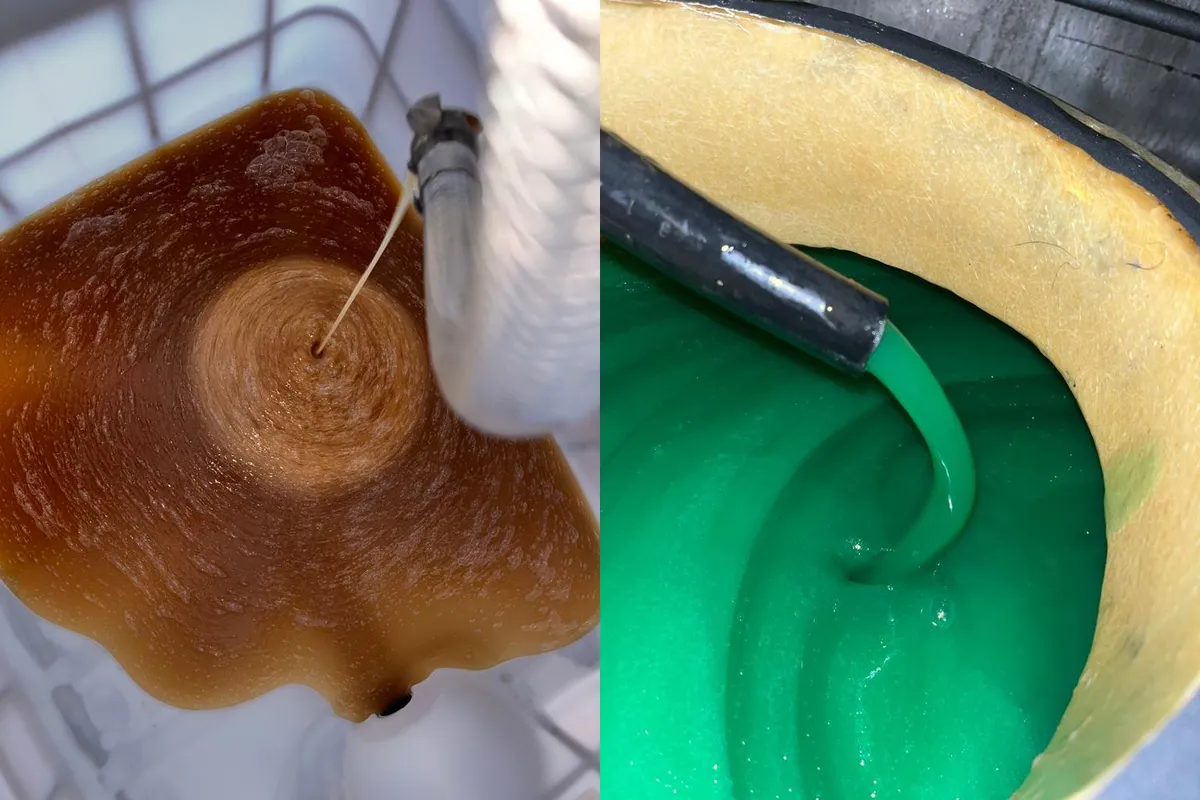
Our Fluor Clean products are engineered to do what water can’t: break that bond, so the PFAS can be removed under control and handled as the waste it is.
The regulation’s only objective cleaning specification is 50 mg/L total PFAS in foam from equipment cleaned to best available techniques. NGP’s own acceptance criterion is below 20 ppb total PFAS in rinse water sampled from the lowest point — a different measurement matrix, so the two figures are not directly comparable, but a far stricter bar.
The hidden cost trap
The standard approach floods your system with chemicals — then bills you again to incinerate every litre of wastewater it just created. NGP engineered most of that away: chemistry that leaves far less wash water shrinks both invoices at once.
Traditional competitors: a large cost, roughly half upfront chemical purchases and half high-temperature incineration fees. NGP method: under a fifth of that in total — smaller chemical volumes and far less waste to incinerate.
Proprietary NGP chemistry leaves minimal wash water — you save on the chemicals going in and the hazardous-waste disposal going out.
Specialised high-pressure rigs and dedicated crews finish in a fraction of the standard time — the vessel returns to commercial operation fast.
Waste & liability
PFAS waste can’t be dumped, diluted or sent down the wastewater line — it must be destroyed above 1,100 °C. Agree it on the order, and NGP takes 100 % control of the waste logistics from pump-out to destruction: labelled, logged, and moved under chain-of-custody documentation at every hand-off.
Guaranteed Certificate of Destruction — after every job.
Proven on your kind of ship
This is the scope NGP has delivered on around eighty vessels since 2023 — subsea construction vessels, container ships and ferries. It does not change with the vessel type, only the sequencing.
Henriette Maersk
Changed under way. Zero off-hire.
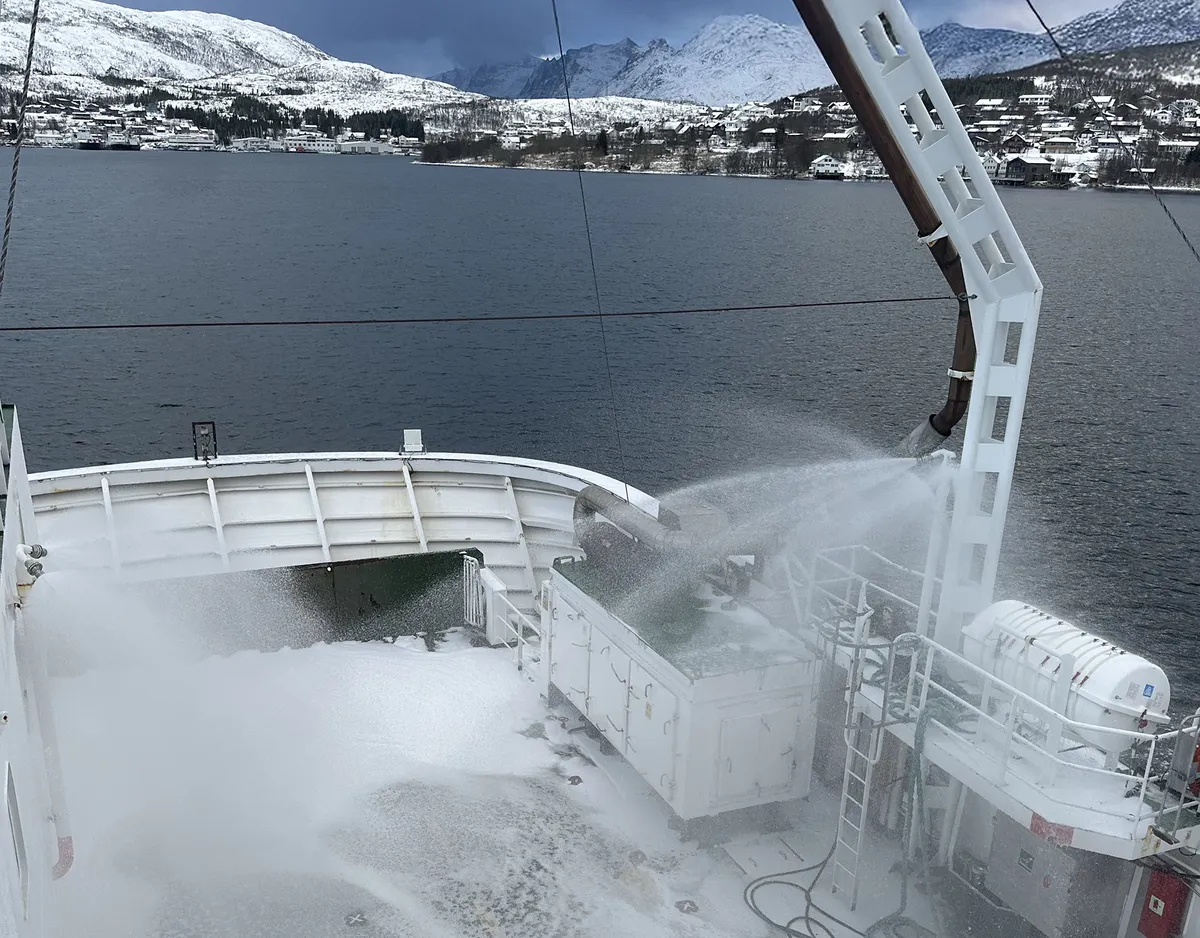
Foam replacement and full system cleaning completed while the vessel was under way. Off-hire is the first objection every fleet manager raises. On this hull there was none.
Where we have done this
Around eighty vessels since 2023, from Bergen to Singapore. We bring the crew, the equipment and the waste chain to the ship, so the job fits your schedule rather than ours.
The regulatory horizon
PFAS compliance isn’t one deadline — it’s a tightening series. And every step assumes your system, not just your foam, can pass a laboratory analysis.
In force
PFOS, PFOA and more
SOLAS PFOS ≤ 10 mg/kg. EU POP PFOS ≤ 0.025 mg/kg. PFOA, C9–C14 PFCAs and PFHxS limits — all already in force.
October 2026Next deadline
PFHxA + labelling
PFHxA limited to ≤ 0.025 mg/kg in firefighting foams. From 23 October: mandatory labelling of foam holding ≥ 1 mg/L total PFAS, a foam management plan reviewed annually, Class B use only and separate waste collection.
August 2028
Legacy interim ends
The interim allowance for PFOA in installed legacy systems runs out.
October 2030
The full ban
General prohibition of PFAS in firefighting foams — sum of all PFAS ≥ 1 mg/L. Foam from equipment cleaned to best available techniques: < 50 mg/L.
October 2035
Ships and offshore
End of the transition for civilian ships with foam on board before 23 October 2025 and offshore oil and gas installations. The interim duties still apply throughout.
Chemical cleaning crucial
From NGP’s compliance material; entry 82 figures verified against Reg. (EU) 2025/1988. References open the governing act at EUR-Lex and the IMO.
Used in this transition
Our Fluor Clean products — the chemistry NGP FoamSafe is built on.
No. Simply draining a tank is non-compliant — PFAS from legacy foam persists on internal surfaces and components, and residual cross-contamination will fail laboratory analysis.
PFAS adsorbs to steel, coatings and residue. Water flushing lowers the number but doesn’t break the adsorption bond — Fluor Clean chemistry does, so the PFAS can be removed under control.
Both are collected in UN-approved IBCs and moved under an unbroken chain of custody, then destroyed above 1,100 °C — with a guaranteed Certificate of Destruction after every job.
Third-party laboratory analysis (NPR-CEN/TS 15968) with lowest-point sampling, plus fire test and induction check by the class partner — a documentation package DNV, Bureau Veritas and Lloyd’s Register accept.
In most cases, yes. Equipment is rigged with zero operational disruption and the job is scoped to fit inside your maintenance window — on Henriette Maersk the full foam replacement and system cleaning was completed while the vessel was under way, with no off-hire.
PFOS limits are already in force under SOLAS — at your first survey on or after 1 January 2026. PFHxA limits, mandatory PFAS labelling and the foam management plan requirement land on 23 October 2026; the interim allowance for legacy PFOA ends August 2028; the general prohibition of PFAS in firefighting foams follows in October 2030. Civilian ships with foam already on board before 23 October 2025, and offshore oil and gas installations, have a transition period to October 2035 — but the 2026 interim duties apply throughout.
No. REACH entry 82 binds the placing on the market and use of foam in the EU and EEA; a vessel that never calls there is not covered by it. SOLAS II-2/10.11 applies to every vessel regardless, and flag administrations and charterers’ vetting programmes increasingly ask for the same laboratory evidence.
Entry 82 allows up to 50 mg/L total PFAS in foam originating from equipment that has been cleaned using best available techniques. It is the regulation’s only objective cleaning specification — and the reason drain-and-fill fails. NGP’s own acceptance criterion, below 20 ppb total PFAS in rinse water from the lowest point, is a different measurement matrix and cannot be compared directly, but it is considerably stricter.
Prefer to talk to a person?