PFAS / PFOS firefighting foam prohibited from 1 January 2026
PFAS / PFOS firefighting foam prohibited from 1 January 2026
IMO amendments under MSC.532(107) prohibit the use or storage of PFOS containing firefighting foam. Existing vessels must demonstrate compliance at the first survey on or after 1 January 2026.
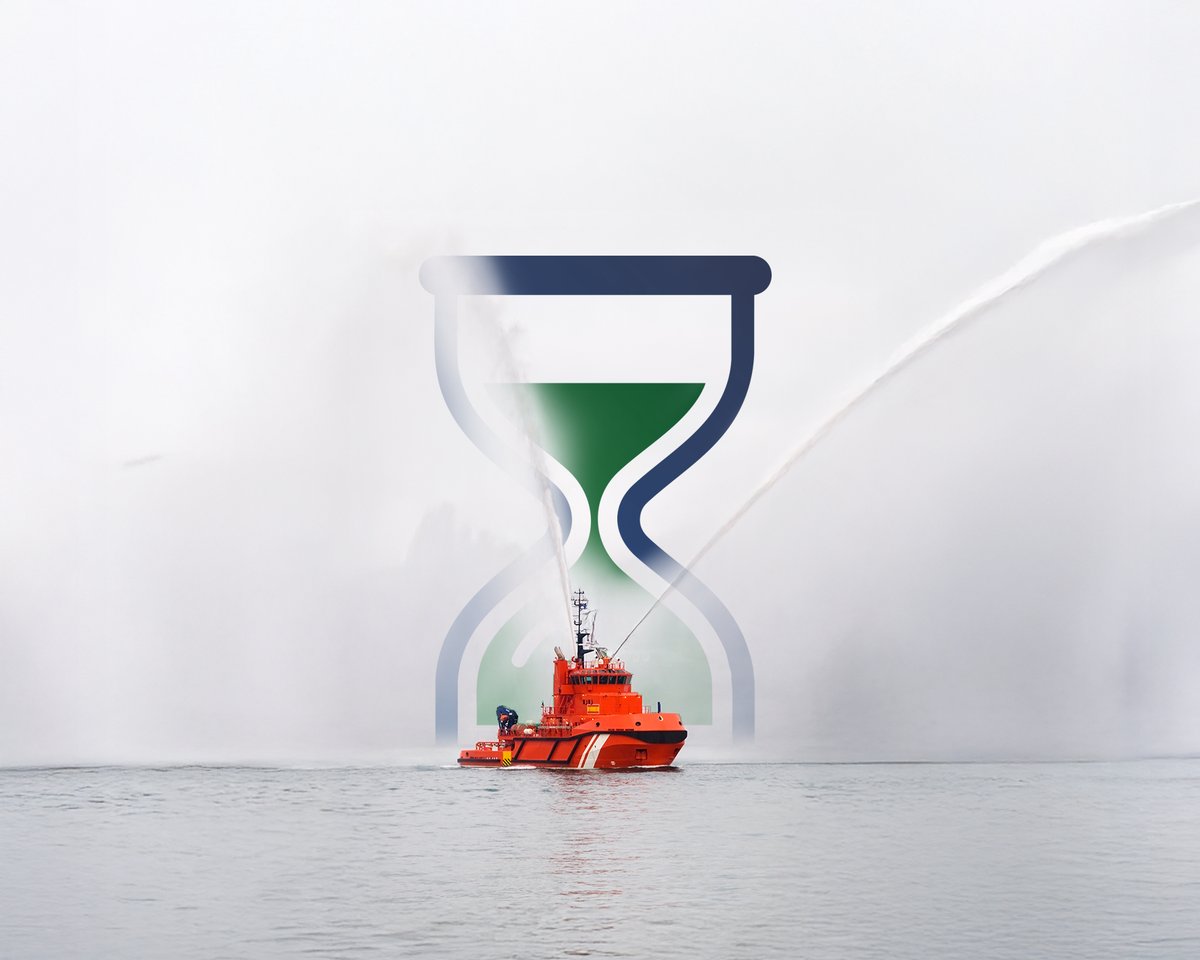
A major regulatory shift in maritime fire safety
From 1 January 2026, amendments adopted by the IMO under Resolution MSC.532(107) enter into force. These amendments prohibit the use or storage of fire-extinguishing media, including firefighting foam, containing perfluorooctane sulfonic acid (PFOS) above the specified limits under SOLAS Chapter II-2.
For existing vessels, compliance is required no later than the date of the first survey on or after 1 January 2026, as defined by SOLAS and IMO unified interpretations. This marks the start of enforcement, not a future planning milestone.
Although the regulation does not explicitly state that foam must be replaced, the prohibition on use and storage means that PFOS-based foam cannot remain in the system once the compliance date applies.
This is no longer a planning exercise
As of January 2026, shipowners and technical managers must be able to demonstrate that their firefighting foam systems comply with the updated requirements.
PFOS-containing foam may no longer be:
- Used in fire-extinguishing systems
- Stored onboard
- Reintroduced into a system after the compliance date
In practical terms, compliance requires:
- Removal of existing PFOS foam
- Cleaning of tanks, piping and system components
- Installation of a PFOS-free alternative
- Documentation acceptable to class and flag
Failure to address this in advance may result in deficiencies during surveys or inspections and can lead to operational delays depending on findings.
What does “first survey” mean in practice
The regulation does not provide a grace period until the end of 2026.
For ships constructed before 1 January 2026, compliance is required by the first applicable survey on or after that date. Depending on the vessel and certification cycle, this may include:
- Annual surveys
- Intermediate or periodic surveys
- Renewal surveys
Example:
If a vessel has a scheduled safety equipment survey in January or February 2026, the firefighting foam system must be compliant before that survey takes place.
Waiting until the survey window opens significantly increases the risk of non-compliance findings.
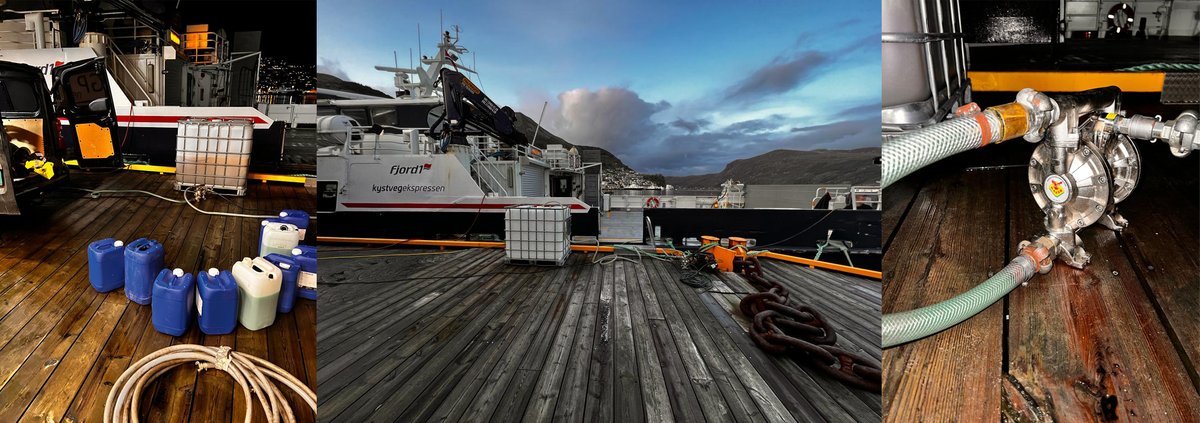
Foam replacement done by NGP on one of the many vessels we have completed in Norway
Why drain and refill is a technical and commercial risk
A common misconception is that operators can simply drain PFOS foam and refill the system with fluorine-free foam.
In many cases, this approach has proven unreliable.
PFAS, PFOS and PFOA residues tend to adhere to the internal surfaces of:
- Foam tanks
- Piping and valves
- Proportioners and pumps
When new foam is introduced, residual contamination can migrate back into the liquid, resulting in concentrations above regulatory limits.
If residual contamination is detected:
- The system may fail sampling during survey or inspection
- Newly installed foam may need to be removed and disposed of
- Additional cleaning and rework may be required
- The vessel may experience operational delays until compliance is restored
This is why class societies and environmental authorities emphasize controlled cleaning and documented verification.


Removing PFAS, PFOS and PFOA residues from existing systems
Effective removal of PFOS and PFOA requires more than water flushing.
Fluor Clean Gel and Fluor Clean Fluid are used to remove PFOS and PFOA residues before installation of new foam. Post-cleaning sampling is then performed to document system cleanliness.
Independent laboratory results after cleaning typically show:
- PFOS: 0.000031 mg/l, well below the 10 mg/l limit
- PFOA: below detection level and below the 0.025 mg/l limit
This level of cleanliness significantly reduces the risk of rebound contamination when switching to fluorine-free foam.

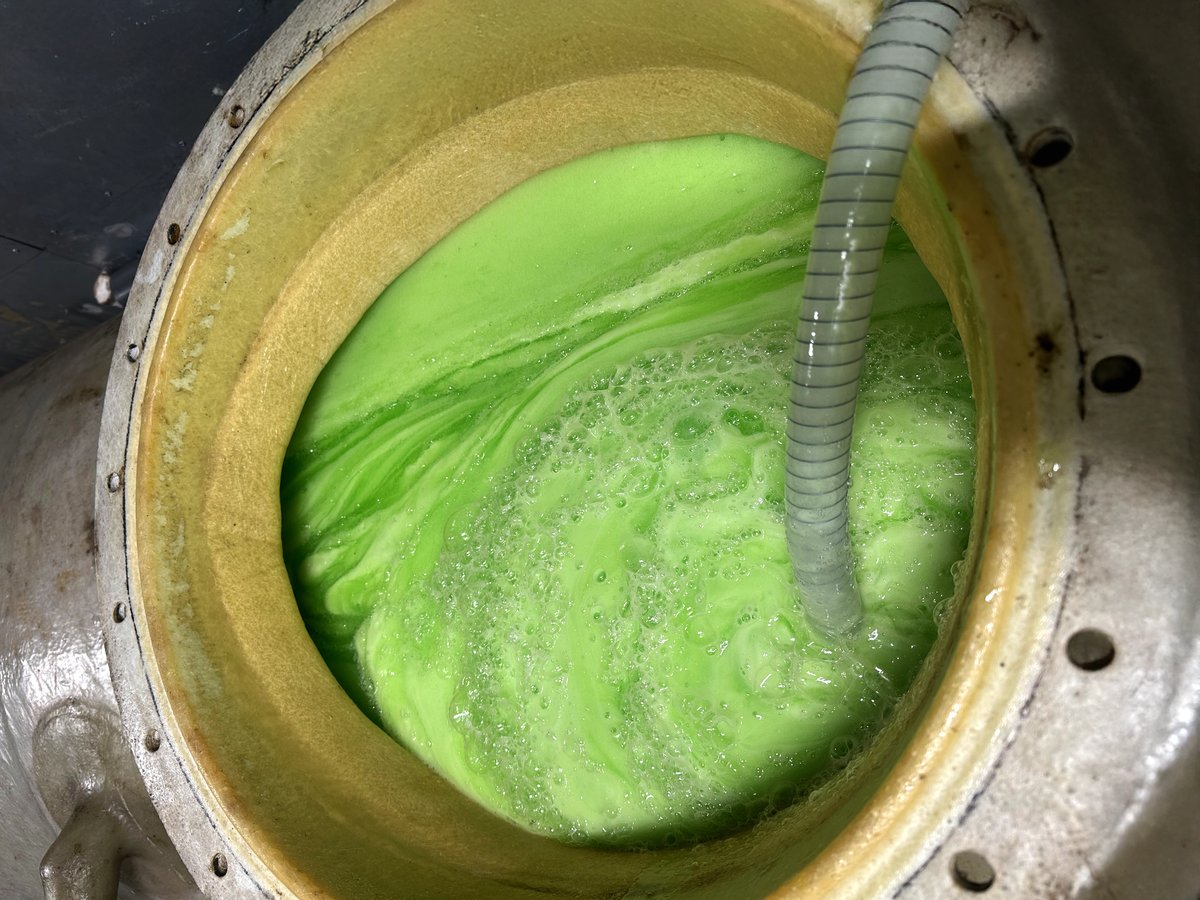
Removal of old foam containing PFAS, PFOS and PFOA and replacing it with PFAS free alternative
Why early action is critical
With enforcement now in effect, operators face several immediate constraints.
Laboratory capacity
Turnaround times for PFAS, PFOS and PFOA analysis are increasing as demand rises.
Waste handling capacity
Approved disposal routes for PFAS-containing foam are limited and require proper planning and documentation.
Execution capacity
Specialized cleaning and replacement crews are being booked rapidly for Q1 and Q2 2026 port calls and drydockings.
Delaying action reduces flexibility and increases the risk of operational disruption.
Operational support for 2026 compliance
Nordic Green Products supports vessel operators with a structured transition process focused on regulatory alignment and operational efficiency.
Support includes:
- Foam sampling and PFOS and PFOA analysis
- Controlled system cleaning
- Removal and documented disposal of PFAS foam
- Supply and installation of approved fluorine-free foam
- Documentation aligned with class and flag requirements
Support is available for individual vessels as well as fleet-wide programs.
Prepare your vessel for compliance
The PFOS prohibition under MSC.532(107) represents a significant shift in maritime fire safety and environmental responsibility.
Operators who act early can:
- Reduce compliance risk
- Avoid survey-related delays
- Ensure a controlled and documented transition to fluorine-free systems
For planning, availability or technical assessment, contact:
Atle Falk, CCO
Phone: +47 919 98 665
Email: atle@ngproducts.no
Krister Turøy, Project Manager
Phone: +47 402 25 555
Email: krister@ngproducts.no
Plan your PFAS / PFOS free transition
Secure the cleaning and foam replacement your vessel needs before its next survey. Early planning ensures full compliance with the 2026 rules.