Five Lessons from Heavy-Duty Industrial Cleaning
Five Lessons from Heavy-Duty Industrial Cleaning
Industrial cleaning is a precise science of chemistry, materials, and process control. These five lessons from large-scale marine and industrial operations show how planning, timing, and discipline matter more than chemical strength.
Industrial cleaning, particularly in marine and heavy engineering environments, is far more than a matter of surface maintenance. It is a technical discipline rooted in applied chemistry, materials science, and process control. Cleaning the internal surfaces of tanks, box coolers, and piping systems demands precision, planning, and a scientific understanding of chemical interactions under varying environmental conditions.
The following five insights are drawn from years of field experience in large-scale industrial cleaning operations. They highlight how the difference between success and failure often comes down to timing, testing, and disciplined execution rather than raw chemical strength.
1. The Principle of Optimal Exposure
A common misconception in industrial cleaning is that longer exposure to a cleaning chemical will automatically yield better results. In reality, each cleaning product has a specific operational window, an optimal exposure time during which the chemical reaction performs as intended.
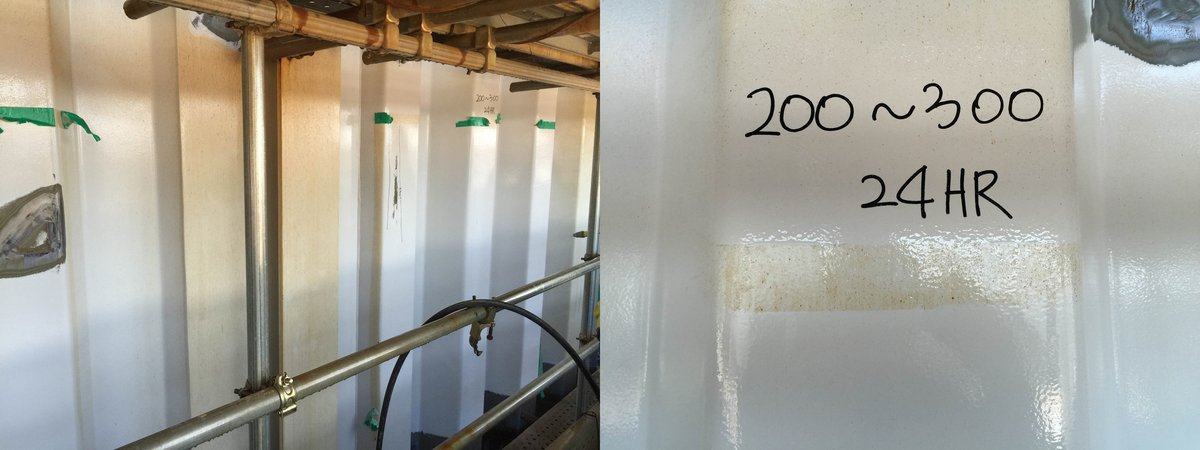
Test patches on surfaces with exposure times
If a high-performance cleaning gel remains on the surface for too long, particularly under direct sunlight or high temperatures, it may begin to dry out. Once this occurs, the chemical reaction stops, and the residue hardens into a layer of inactive material that is more difficult to remove than the original contamination. In some cases, a new layer of product must be applied simply to dissolve the dried residue before cleaning can resume.
Extended exposure can also cause surface discoloration, particularly on coated materials such as green epoxy. The critical lesson is that time is not a passive variable; it is an active component of the chemical process. Accurate control of exposure duration is therefore as important as selecting the right product.
2. The Necessity of Test Patches
No two cleaning environments are identical. Variables such as material composition, surface temperature, corrosion depth, ambient humidity, and exposure to sunlight all influence how a chemical reacts. For this reason, a standardized “one-size-fits-all” procedure is not feasible.
Before any large-scale operation begins, professionals conduct a test patch on a representative section of the surface. This test establishes key operational parameters:
- The ideal product thickness (typically ranging from 200 to 400 microns)
- The optimal exposure time, which may vary from as little as 15 minutes to more than 24 hours depending on the severity of corrosion and environmental conditions.
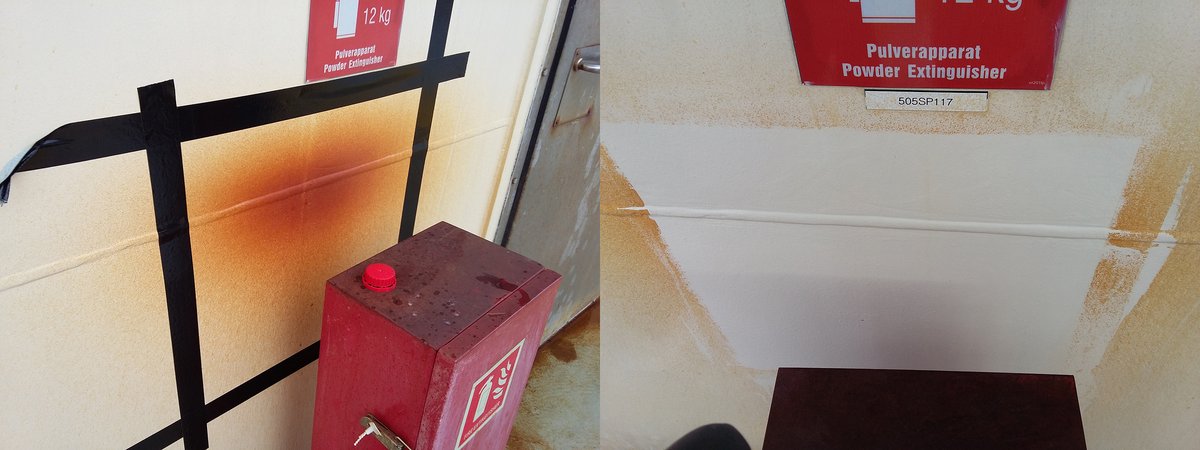
Test patch for use of Valhall Gel on surface
This controlled testing phase transforms every cleaning project into a data-driven process, reducing risk and ensuring predictable, repeatable results across the full work area.
3. Monitoring Progress Through pH Measurement
In closed-loop cleaning operations, such as the internal descaling of piping systems or coolers, it is not possible to visually monitor chemical reactions as they occur. Instead, technicians rely on pH measurement as a real-time indicator of progress.
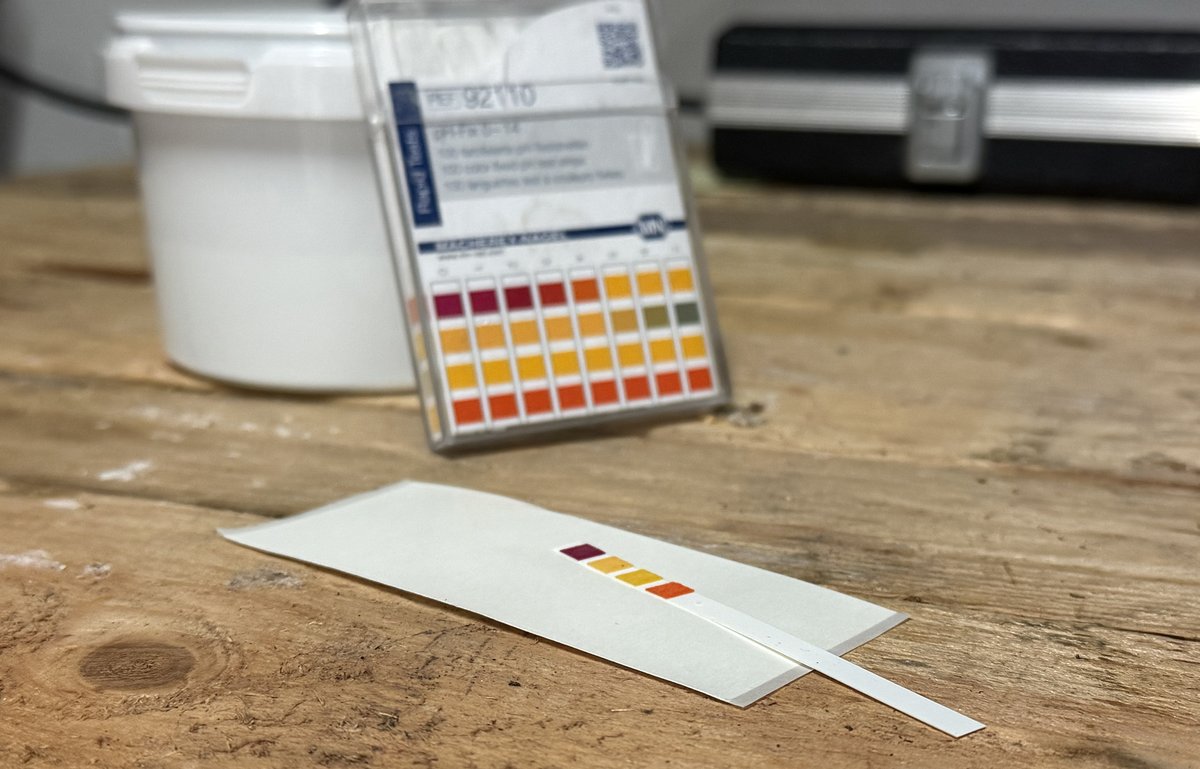
PH value sample, taken from one of our workshops
A freshly prepared acidic cleaning solution may begin with a pH of around 1.5. As it circulates through the system and reacts with rust, scale, and other deposits, the acid is gradually consumed, and the pH rises. By periodically testing the returning solution, technicians can determine when the chemical has reached its effective limit.
For example, once the pH climbs to approximately 2.0–3.5, the solution is considered “spent,” signaling that the reaction is complete or that additional concentrate must be added to continue the process. This approach transforms pH monitoring into a simple yet powerful diagnostic tool, providing clear, quantifiable feedback on cleaning efficiency.
4. Environmental Factors as Critical Process Variables
Environmental conditions exert a significant influence on the outcome of industrial cleaning operations. Temperature, sunlight, humidity, and precipitation can all alter reaction speed, product behavior, and overall effectiveness.
High heat and direct sunlight can cause gel-based products to dry prematurely, halting the chemical process. Heavy rain may wash away the product before it completes its reaction, leading to wasted materials and inconsistent results. Cold temperatures, on the other hand, slow down reaction kinetics, extending required exposure times and sometimes doubling them.
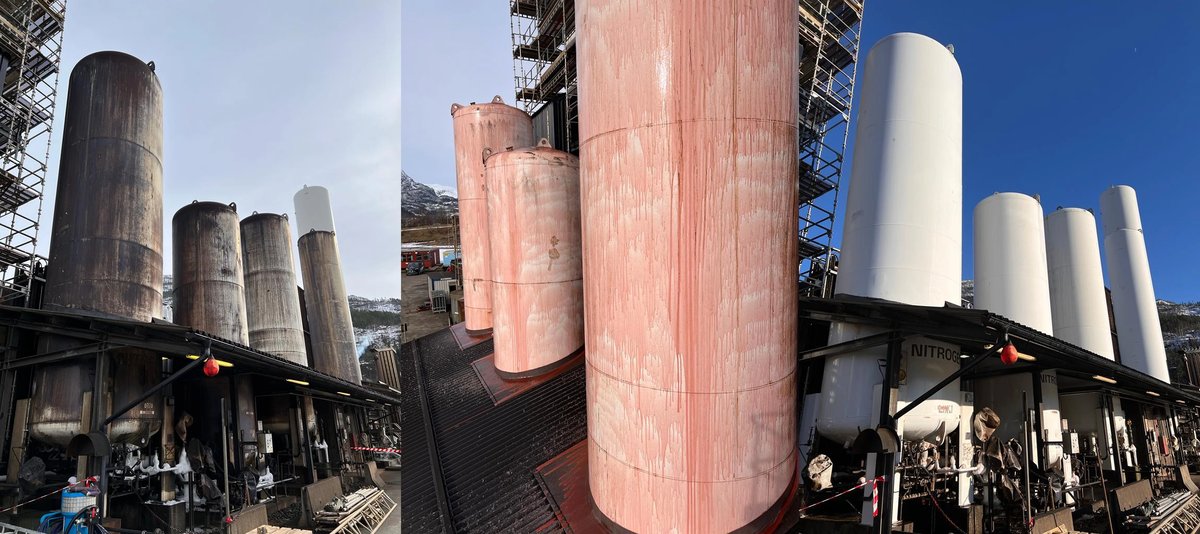
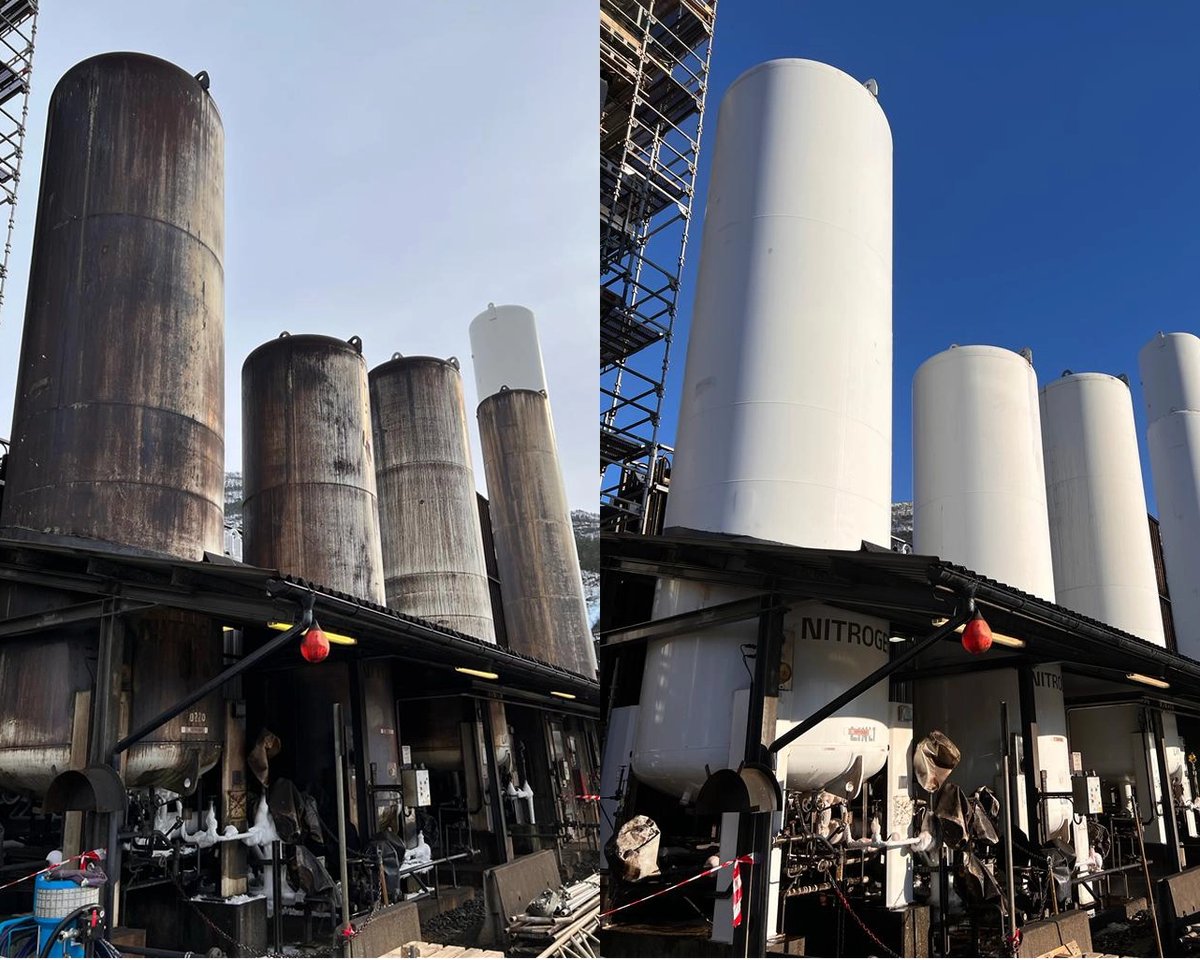
Surface treatment for Nippon Gases with Odin Gel
Effective planning must therefore account for these external factors. Successful technicians often work during cooler hours, build temporary weather protection, or preheat surfaces to maintain optimal conditions. In this field, environmental awareness is not optional; it is part of the operational discipline.
5. The Systematic Approach to Industrial Cleaning
High-quality industrial cleaning is not a single-step task but a multi-stage, integrated process. Each phase builds upon the previous one, and a failure in any stage compromises the entire result.
Consider the refurbishment of a ship’s box cooler. The process begins with detailed planning and a documented Safe Job Analysis (SJA). It proceeds through several distinct phases:
- Mechanical preparation: Removal of marine growth and loose paint using high-pressure washing, often up to 500 bar.
- Chemical cleaning: Application of specialized products to dissolve persistent contamination.
- Surface preparation: Sandblasting with a controlled medium such as Garnet Mesh, which prevents damage to sensitive metal components.
- Recoating: Application of two precise layers of marine-grade epoxy.
- Quality assurance: Pressure testing the cooler in accordance with the manufacturer’s specified procedure to verify integrity.
- Final flushing and reinstallation: Ensuring that no debris remains and that all fasteners are tightened to the specified torque pattern.

Sandblasted, to recoated box cooler.
This sequence illustrates that industrial cleaning excellence depends on procedural precision, not on the aggressiveness of the product used. The methodology is the determining factor in long-term success.
The field of heavy-duty industrial cleaning demands precision, discipline, and technical understanding. Each task involves balancing chemical kinetics, environmental variables, and procedural control.
The most important lessons from this work can be summarized simply:
- Time must be managed as a chemical variable.
- Each surface and condition requires individualized testing.
- Monitoring and data collection are integral to quality assurance.
- Environmental awareness is essential to success.
- Process discipline outweighs chemical strength.
Industrial cleaning, when executed correctly, is a scientific operation—an orchestration of chemistry, physics, and planning that ensures equipment reliability, environmental compliance, and operational safety.